





You finally pulled the trigger on the big backyard upgrade, a hot tub to sink into on cool evenings, maybe even a pool for the kids all summer, and then the installer casually asks the one question nobody ever warned you about: can your electrical panel actually handle all of this? Far more often than most people ever expect, the honest answer is a flat no, and a pool electrical panel upgrade in Cave Spring, Virginia, quietly turns out to be the hidden first step you have to take before any of the real fun stuff can even begin. Nobody dreams about breaker panels when they picture a backyard oasis. But that gray box on the wall decides whether the dream is even possible. So here are the clear signs yours just isn’t ready yet.
1. Why a Hot Tub or Pool Demands So Much Raw Power
It’s honestly really easy to badly underestimate just how power-hungry these backyard luxuries truly are. A typical hot tub needs its own dedicated circuit pulling a hefty forty to sixty amps, and a pool piles on pumps, heaters, and lighting that all draw steadily for hours at a time. That’s nothing at all like simply plugging in a toaster, it’s far closer to adding a whole second small home’s worth of demand. Your existing panel was carefully sized for the house exactly as it was originally built, often many years before anyone imagined a bubbling spa out back. Pile a major new load like that onto a panel that’s already running near its capacity, and something eventually has to give.
2. Sign One: There’s Simply No Room Left in Your Panel
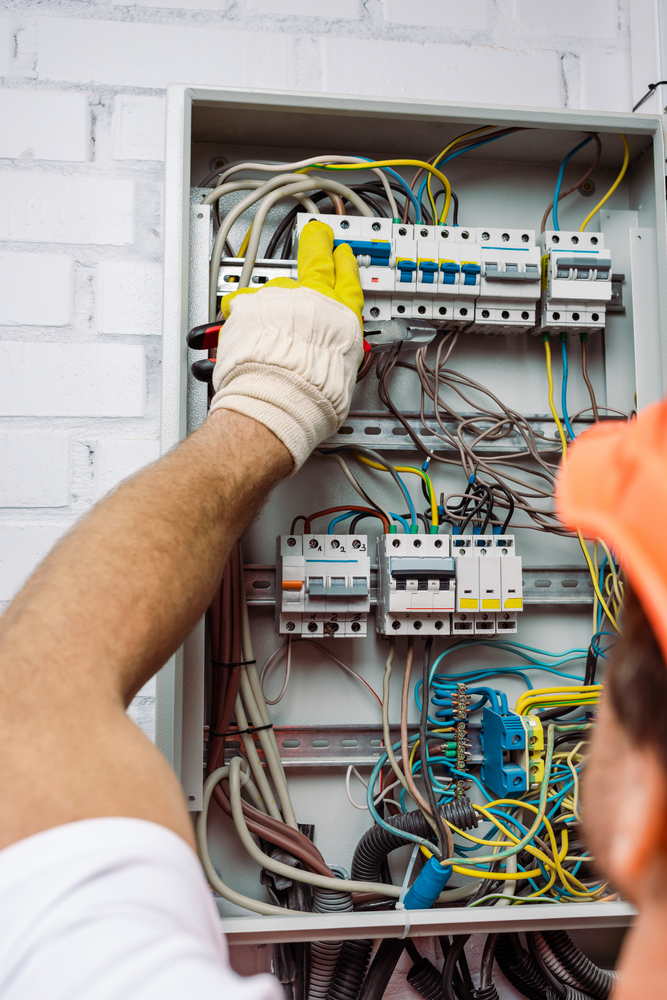
Open up the panel door, and the very first clue is sitting right there in plain sight: are there any empty slots at all left for new breakers? A hot tub or a pool needs its own dedicated double-pole breaker, and if every single slot is already full, there’s quite literally nowhere left to even connect it. Meeting the hot tub wiring requirements in Virginia means a properly sized breaker, the exact right wire gauge, and a GFCI for safety anywhere near the water, and none of that fits into a maxed-out panel. Some installers will try to cram in tandem breakers as a quick shortcut, but that often just overloads the panel even further instead of actually fixing anything. A completely full panel is honestly the single clearest sign that you’ve simply outgrown what you currently have.
3. Sign Two: You’re Still Running an Older, Smaller Panel
Even with one free slot sitting wide open, an older panel may simply not have the raw amperage to spare for any of this. A whole lot of older homes around here still run on just 100-amp service, which was plenty in its day but leaves precious little real headroom for a modern spa or pool. Once you actually sit down and total up all of your existing electrical loads, there often just isn’t anywhere near enough left to safely add a big new one. A subpanel installation for outdoor living is very frequently the cleanest possible answer here, a dedicated secondary panel just for all the backyard equipment, fed straight from an upgraded main service. That keeps your big new load neatly organized, fully code-compliant, and safely separated from the rest of the whole house.
4. Sign Three: The Warning Signs Are Already Showing
Sometimes your home is honestly already trying hard to tell you the panel is stretched way too thin. Lights that visibly dim when the AC kicks on, breakers that trip during totally normal use, a noticeably warm panel cover, or that faint buzzing sound all clearly point to a system running right near its absolute edge. Add a power-hungry hot tub on top of all that, and you’re really just asking for tripped breakers at best and a genuine fire hazard at the very worst. This is exactly why good licensed residential electricians always insist on a real load calculation before any big addition, never just a quick rough guess. They carefully measure what your home actually draws and then size the whole upgrade to perfectly match, with real safety margin to spare.
5. What a Real Panel Upgrade Actually Involves
If you genuinely do need an upgrade, the whole process is far more straightforward than most people quietly fear. An electrician runs a careful load calculation, pulls the right permit, and then swaps your old service for a higher-capacity panel, often moving you from 100 up to a full 200 amps. It’s usually just a single-day job that ends with an inspection to confirm absolutely everything meets current code. Yes, it’s an added cost sitting on top of the hot tub or pool, but it’s also a lasting upgrade that benefits your entire home, not only the backyard. Think of it as quietly building the solid foundation that makes the whole fun part safe to actually enjoy for years.
A new hot tub or pool is honestly a fantastic addition to any home, but it’s also a seriously big electrical load that a lot of older panels simply can’t support safely at all. If your panel is already full, your main service is too small, or your home is quietly showing warning signs, an upgrade truly isn’t some upsell, it’s the safe foundation the entire project rests on. The genuinely good news is that a proper load calculation tells you exactly what you need, with absolutely no guesswork involved at all. That careful, measured, code-first approach is precisely how Cline Electrical has worked since 1997, a family-owned team with over twenty-five years of fully licensed experience powering homes all across Cave Spring and the greater Roanoke area. Before you ever fill that tub or dive into that pool, they’ll make absolutely sure your panel is genuinely ready to handle it safely.
“Dreaming of a hot tub or pool? Make sure your panel can handle it. Call Cline Electrical at 540-701-0110 for a load check and honest options today.”
FAQs
Q1: Do I need a panel upgrade for a hot tub in Cave Spring, Virginia?
In Cave Spring, Virginia, you often do, since a hot tub needs its own 40 to 60 amp dedicated circuit, and many older panels lack the room or capacity. A load calculation tells you for sure. If the panel is full or on 100-amp service, an upgrade or subpanel is usually required.
Q2: How much does an electrical panel upgrade cost in Cave Spring, Virginia?
For homeowners in Cave Spring, Virginia, upgrading from 100 to 200 amps is a moderate investment that varies with your home and service. Adding a subpanel for backyard equipment changes the figure too. A licensed electrician can run a load calculation and give you clear, itemized options.
Q3: Can my house handle a pool and a hot tub in Cave Spring, Virginia?
Around Cave Spring, Virginia, that depends on your panel’s capacity and current load. Pools and hot tubs add heaters, pumps, and lighting that draw heavily. A load calculation shows whether your existing service can take it or whether an upgrade or subpanel is needed to do it safely.