





Introduction
When a sudden power outage hits, nothing feels worse than realizing your backup generator won’t start. Homeowners often rely on this vital equipment to maintain comfort, safety, and convenience during storms or grid failures. However, even the best systems have limits and can fail without warning. Recognizing when it’s time for an upgrade can save you money and prevent emergencies. Understanding the signs of wear helps protect your investment in a whole-house emergency backup generator in Salem, VA.
Signs You Need a New Whole-House Backup Generator
1. Frequent Start-Up Problems
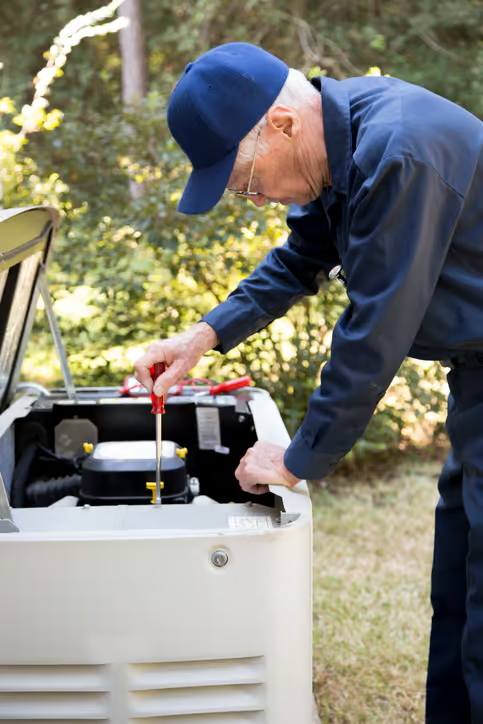
A generator that hesitates or fails to start could be signaling mechanical wear or electrical failure. This problem often occurs after years of use or from a lack of maintenance. If it cranks but never runs smoothly, the motor or control board might be nearing the end of its life. Frequent start-up issues mean your generator may no longer provide dependable power when it’s needed most. Replacing it before it fully breaks down prevents larger inconveniences later.
2. Rising Repair Costs and Decreased Efficiency
As equipment ages, the cost of repairs often increases. Components such as fuel pumps, starters, and wiring degrade over time. When parts fail repeatedly or performance becomes unpredictable, investing in a new generator may be more practical. Older systems also tend to consume more fuel while producing less power. If maintenance visits are becoming a routine expense, an upgrade could offer better reliability and long-term savings on energy and repair costs.
3. Unusual Noises or Vibration During Operation
Generators are designed to run with minimal noise once properly tuned. When rattling, grinding, or knocking sounds start to occur, it’s a clear indicator that something is wrong inside the engine or alternator. These noises suggest misaligned components, worn bearings, or structural fatigue. Prolonged vibration can damage sensitive electrical parts and lead to sudden failure during operation. Addressing such issues early with an inspection can reveal whether repair or replacement is the safest route.
4. Outdated Technology and Safety Risks
Modern generators come equipped with advanced monitoring, automatic load management, and fuel-efficiency improvements. Outdated units lack these benefits and may not comply with current safety standards. Aging electrical connections or corroded parts can pose fire or shock hazards. Scheduling an electrical system safety inspection in Salem, VA, helps detect these risks and guides homeowners on whether replacement is necessary. Investing in a modern generator not only provides better performance but also improves household safety.
When a backup generator begins to lose reliability, it’s best not to wait until a major storm hits. Paying attention to frequent malfunctions, excessive fuel use, or physical wear allows for timely upgrades. A newer system delivers steady power, reduces maintenance, and operates more efficiently during emergencies. Always choose equipment designed to match your home’s power requirements and tested for safety under local codes.
Conclusion
Reliable power shouldn’t be a gamble. Contact us at Cline Electrical Services at 540-701-0110 to schedule professional generator assessment and replacement services backed by trusted local experts.
📌 Now serving as Cline Electrical—your local comfort experts delivering the same trusted, fast, and reliable electrical services you rely on!